

Cattery listings are marketing, not documentation. Vetting one takes about ten minutes if you use a breed identification tool at three specific moments. The sloppy fakes surface before your deposit does.
Timing 1: The day you see the listing
The website shows three photos of adult breeding cats labeled as purebred. Save them and run each one through a breed identification tool. A listing that says British Shorthair but shows a cat with tabby banding in the coat, or a face shape that reads wedge instead of round, has already contradicted itself. Purebred British Shorthairs carry dense, even coats with no pattern and famously round cheeks. Five minutes now beats a deposit dispute later.
Timing 2: During the kitten video call
At eight weeks old, kittens have not grown into their breed’s head shape, and identification tools return weak signals on them. That weakness is information. If a tool returns a confident, flat verdict on a photo of a “kitten”, the photo is probably not a kitten, or it is staged. Ask for live video of the breeding adults instead of album shots. Live video is the hardest thing to fake and the easiest thing to verify.
Timing 3: The day you visit
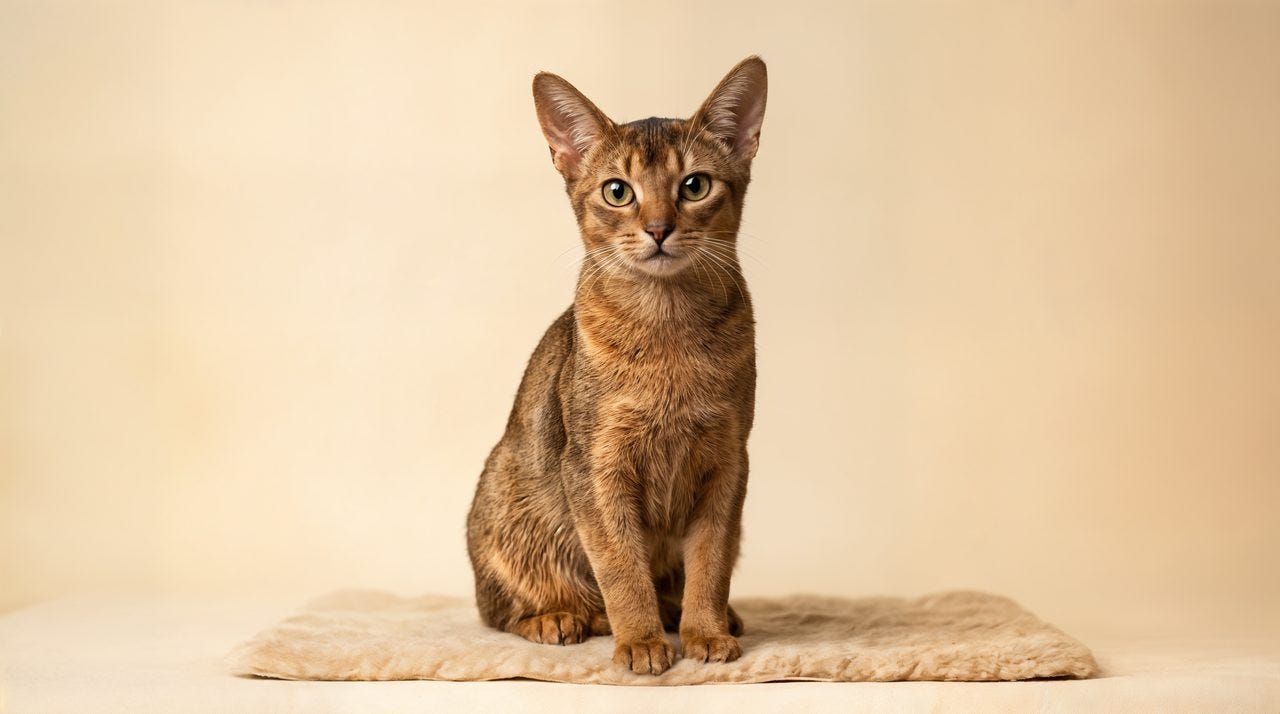
Photograph the cat in front of you and run the check against the registration claim. A solid-color cat that shows ticking does not match a pedigree certificate for a solid breed, and that conversation should happen in the room. Check the paperwork too: a registered cattery provides a pedigree certificate from an association like CFA or TICA. “Our own breeding records” is not a certificate, it is a way of avoiding accountability.
On choosing the tool
I ran this workflow against furriq’s cat breed identifier comparison, which shows what each region of the cat matched, what it ruled out, and where confidence sits. The workflow does not depend on the tool: archive the photos, run each cat, cross-check against the paperwork. The tool does not certify anything. It just exposes the careless lies before the third timing does.
Want the deeper version? The ticked coat test, explained step by step, lives on the Furriq blog — and I wrote about why so many shelter cats are labeled “Abyssinian mix” on Medium.
Quick note on workflow: the three timings also work for adoption listings, not just paid catteries. Shelter photos are usually worse quality, so expect weaker tool signals — that is exactly when you ask for a short video instead of another photo.